

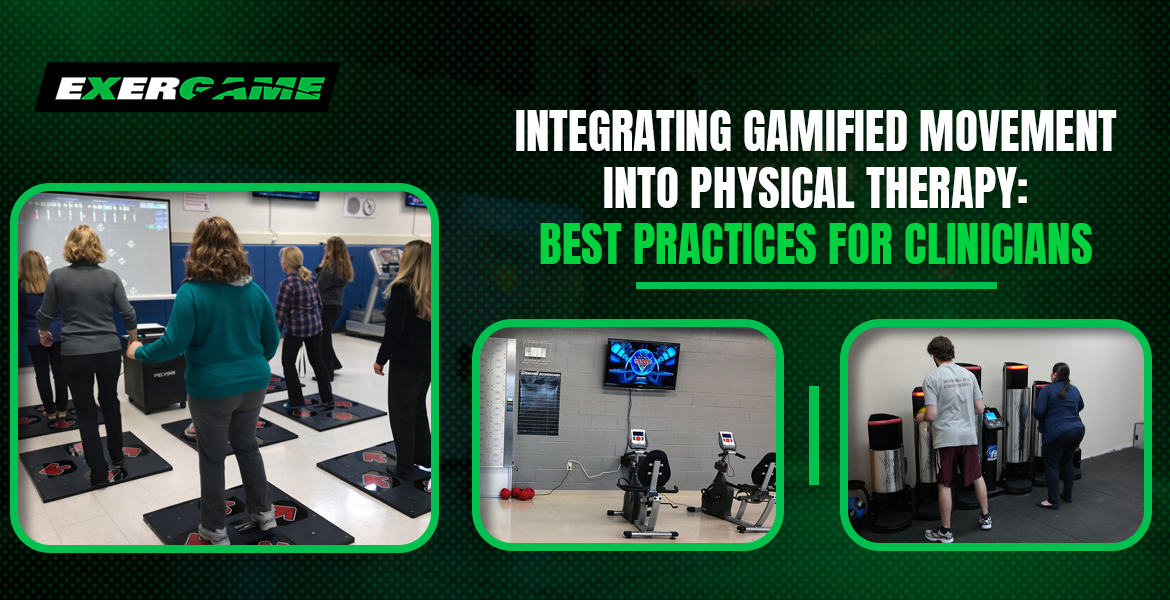
A patient may start recovering using rehabilitation programs but lose engagement, which leads to weak mental strength. For clinicians, gamified movement in physical therapy can make a large difference in patient recovery by offering better engagement. Connecting with Exergame Fitness can support transforming prescribed exercises into interactive, goal-driven experiences.
Why Gamified Movement Matters in Clinical Rehabilitation
Incorporating gamification in healthcare is not just about entertainment or replacing treatment but acts as a delivery framework. Mechanisms such as progression, feedback, and task-based challenges serve to reinforce evidence-based movement patterns.
In some of the clinical experiences, physical therapy gamification can:
- Motivate patient and session adherence
- Encourage higher repetition of therapeutic movements
- Offer real-time feedback that supports motor learning
- Decrease perceived effort during demanding rehabilitation phases
For most of the clinicians who are dealing with patients with neurological, orthopedic, pediatric, or age-related mobility challenges, gamified approaches can complement traditional interventions without compromising clinical rigor.
Combining Gamified Movement with Therapeutic Goals
The results of gamified movement in physical therapy depend on intentional clinical integration. Technology should be utilized in a manner that does not resemble dictation.
The effective practice starts with mapping each game-based activity to a defined therapeutic objective, such as:
- Enhancing balance and postural control
- Increasing range of movement
- Better enhancement of coordination and reaction time
- Supporting weight shifting and gain training
With the help of uniquely designed interactive physical therapy exercises, clinicians can adjust intensity, movement demands, and duration, providing customized care plans.
Choosing Clinically Relevant Game Mechanics
When it comes to rehabilitation, you can’t trust all games. With the help of an effective gamification in physical therapy you can prioritize functional movement patterns over passive interaction.
Clinicians is required to opt for systems that support:
- Tracking full-body movement
- Difficulty levels adjustment to match patient progress
- Providing feedback using a visual or auditory form that reinforces correct form
- Task-based problems that mimic real-life movements
Active games can promote neuromuscular engagement while preserving safety and clinical control with the help of correct implementation.
Integrating Gamified Tools into Clinical Workflow
Rather than disrupting them, gamified tools must fit seamlessly into therapy sessions to achieve the best result. Clinicians, most of the time, find the most value when exergaming is used as:
- A structured warmup to prime neuromuscular activation
- A repetition tool that reinforces learned movements
- A functional training station within circuit-based therapy
- A motivational finisher to finish sessions on a positive note
Exergaming for physical therapy, if integrated thoughtfully, gives support to hands-on clinical expertise.
Enhancement of Patient Engagement Without Compromising Safety
All patients’ safety matters most, especially in a therapeutic setting. It is important to maintain direct oversight, especially for patients with balance deficits, cognitive impairments, or post-surgical limitations.
Best practices contains:
- Checking the appropriateness of patients before introducing them into fitness games
- Giving proper verbal cues alongside on-screen instructions
- Monitoring pain response, compensation patterns, and fatigue
- Documenting results just as traditional exercises
Based on several users’ experiences, gamified interventions are most effective when they operate within provided clinical safeguards.
Supporting Adaptive and Inclusive Therapy Programs
The primary clinical advantage of gamified movement is its adaptability. Keeping accessibility in mind, designed systems can support patients across age groups and functional levels.
Exergaming supports inclusive fitness in pediatric therapy or geriatric care by:
- Supporting in standing or seated participation
- Accommodating assistive devices
- Reducing the intimidation that is often associated with traditional exercise
- Delivering adjustable movement ranges
While meeting diverse patient needs, this adaptability allows clinicians to maintain therapeutic consistency.
Measuring Clinical Value and Outcomes
Trust in any therapeutic tool comes from measurable outcomes, especially for clinicians. With the help of gamified data like progression, movement duration, and accuracy, clinical documentation and goal tracking can be supported.
When physical therapy is paired with clinical observation, these supporting insights help in validating the role of gamified movement.
Best Practices for Clinicians Adopting Gamified Movement
To make sure clinical value, you should consider the following guidelines:
- Begin with clear therapeutic intent, not novelty.
- You can use gamification to reinforce—not replace—clinical judgment
- Educate patients on the purpose behind each activity
- Adjust difficulty as patients progress and reassess regularly
Between effective rehabilitation and superficial engagement, clinically led implementation becomes a defining factor.
Conclusion
When it comes to enhancing the capability of clinical rehabilitation centers using Exergame Fitness, a technology-based gaming and fitness platform is a better option. Thoughtfully integrating gamified movement in physical therapy supports functional outcomes, improves adherence, and creates more responsive rehabilitation environments.
Frequently Asked Questions on Integrating Gamified Movement into Physical Therapy:
Q1. Can traditional exercises be replaced by physical therapy gamification?
A1. No, gamification does not replace clinical judgment. Instead, it complements exercises prescribed by clinicians.
Q2. Which patients benefit most from gamification in physical therapy?
A2. Patients who face issues of motivation, adherence, or repetitive exercise routines often benefit the most.
Q3. Can fitness games reduce the clinical value of therapy sessions?
A3. No, in case of using it with good intentions, they improve engagement while preserving therapeutic structure.